A Race Against the Clock
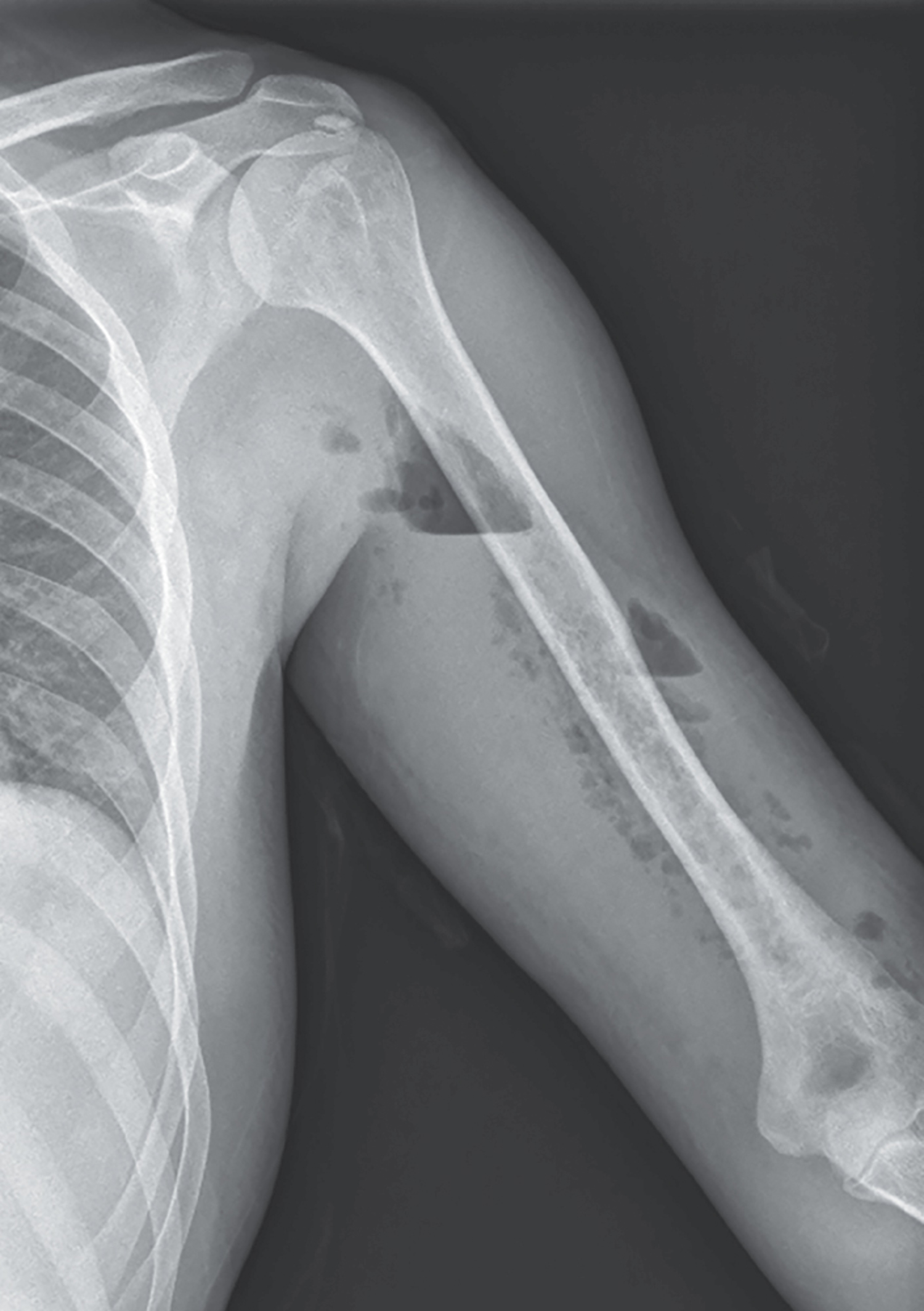
A 37-year-old man presented to the emergency department with a 1-week history of pain and swelling in the left upper arm that had started after blunt trauma during soccer practice. The heart rate was 120 beats per minute, the blood pressure 96/54 mm Hg, and the body temperature 37.9°C. Examination of the left upper arm was notable for swelling, tenderness, and crepitus. The overlying skin was red and warm to the touch. An initial radiograph is shown. Which of the following factors is most associated with increased mortality in this diagnosis?
What is the most likely diagnosis?
Diagnosis, Pathophysiology & OSCE Clinical Study Notes
Delay in surgical intervention >24 hours — The correct answer is delay in surgical intervention >24 hours. The radiograph of the upper arm showed radiolucent areas with air–fluid levels in deep tissue, and subsequent computed tomography revealed pockets of gas in the muscles of the extensor compartment, raising concern about necrotizing myositis. This patient was taken to the OR for emergency surgical débridement, and the diagnosis was confirmed. After 3 weeks of broad-spectrum antimicrobial therapy, the patient regained function of his arm.
Necrotizing myositis is a rare, life-threatening variant of necrotizing soft tissue infection (NSTI) characterized by rapid and extensive necrosis of muscle tissue.
Clinical Presentation & Pathophysiology
Patients often present following trauma, surgery, or sometimes spontaneously. The infection is frequently polymicrobial or caused by toxin-producing organisms like Clostridium perfringens (gas gangrene) or Group A Streptococcus. Key clinical features include:
- Pain out of proportion to the visible skin changes.
- Systemic signs of toxicity: fever, tachycardia, hypotension, and Altered Mental Status.
- Local signs: tense edema, erythema that may progress to a dusky blue color, bullae, and skin anesthesia due to nerve destruction.
- A pathognomonic but not universally present sign is crepitus on palpation, indicating subcutaneous gas produced by anaerobic bacteria.
Management & Prognosis
The cornerstone of management is immediate and aggressive surgical intervention. The single most critical factor determining patient survival is the time to operative débridement.
- Time to Surgery: A delay in surgical intervention of more than 24 hours from presentation is strongly associated with a significant increase in mortality.
- Surgical Débridement: Requires radical excision of all necrotic fascia, muscle, and skin until healthy, bleeding tissue is reached. Repeat débridements are often necessary.
- Antimicrobial Therapy: Broad-spectrum empiric antibiotics covering gram-positives (including MRSA), gram-negatives, and anaerobes must be initiated immediately.
- Supportive Care: Aggressive fluid resuscitation and hemodynamic support in an intensive care setting are essential to manage associated septic shock.
OSCE Quick Revision Q&A
What is the most likely diagnosis for "A Race Against the Clock"?
The most likely diagnosis is Delay in surgical intervention >24 hours. The correct answer is delay in surgical intervention >24 hours. The radiograph of the upper arm showed radiolucent areas with air–fluid levels in deep tissue, and subsequent computed tomography revealed pockets of gas in the muscles of the extensor compartment, raising concern about necrotizing myositis. This patient was taken to the OR for emergency surgical débridement, and the diagnosis was confirmed. After 3 weeks of broad-spectrum antimicrobial therapy, the patient regained function of his arm.
Which medical OSCE exams test Delay in surgical intervention >24 hours visual spot diagnosis?
Visual clinical sign recognition in Surgery is regularly examined in Final MBBS OSCEs, UKMLA CPSA, PLAB 2, MRCP PACES, AMC Clinical, NAC OSCE, and USMLE/MD clerkship clinical exams.